
Why Do You Get Hot While Sleeping? Causes and How to Sleep Cooler
Updated: 4 hours ago
Waking up too warm is not just uncomfortable. It can fragment sleep, make it harder to fall back asleep, and leave the bed feeling less like a place to recover.
The short answer is that you get hot while sleeping when your body, bedroom, bedding, or habits interfere with normal overnight temperature regulation. Your core temperature usually drops as you prepare for sleep. If heat cannot leave the body easily, or if the sleep environment keeps adding warmth, you may feel overheated, restless, sweaty, or wide awake at 03:00.
Sometimes the cause is simple: a warm room, a dense mattress, heavy bedding, or sleepwear that traps heat. Sometimes it relates to alcohol, late meals, stress, hormones, illness, or medication. The useful question is not only “Why am I hot?” but “Where is the heat coming from, and why is it not escaping?”

Your body is designed to cool down before sleep
Body temperature follows a daily rhythm. In broad terms, core body temperature tends to be higher during the day and lower at night. As bedtime approaches, the body begins shifting heat away from the core towards the skin, especially in the hands and feet. This helps the core temperature fall, which supports sleep onset.
That is why warm feet can sometimes feel surprisingly helpful at bedtime. They can signal that heat is moving outwards. The goal is not to make the whole body hot, but to help heat leave the core.
During sleep, temperature regulation continues, but it does not stay identical across the night. Sleep stage, metabolism, room conditions, bedding, and personal physiology all affect how warm or cool you feel. Some people are also more sensitive to small temperature changes. They may wake easily when the bed becomes too warm, even if someone beside them feels comfortable.
Feeling slightly warmer under covers is normal. The problem begins when the heat load becomes high enough to disturb sleep or produce sweating that feels unusual for you.
Overheating can disturb sleep before you notice it
Heat does not always wake you in a dramatic way. It may cause smaller disruptions first.
You might notice:
Turning the pillow repeatedly to find the cool side
Kicking one leg out from under the duvet
Waking sweaty or with damp sleepwear
Feeling restless without knowing why
Sleeping better when the window is open or the bedding is lighter
These are useful clues. They often point to an environment or bedding issue rather than a mysterious sleep problem.
The bedroom can trap more heat than you realise
The sleep environment is usually the best place to start because it is practical and measurable. Air temperature, humidity, airflow, and radiant heat from walls, windows, or electronics all shape how warm the bed feels.
Room temperature should support heat loss
A cool, comfortable bedroom generally supports the body’s normal overnight heat loss, but there is no single ideal temperature for everyone. Comfort depends on factors such as bedding, humidity, airflow, clothing, and individual physiology. The goal is a room that feels cool enough to support sleep without making you cold.
The best target is the temperature that lets you fall asleep without shivering and stay asleep without waking hot.
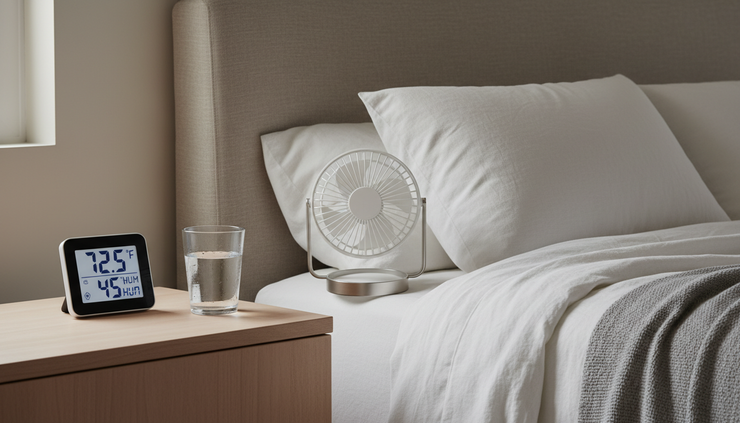
A simple room thermometer or temperature monitor can help. It replaces guesswork with a pattern. If overheating happens mainly when the room is above a certain temperature, the solution may be environmental rather than physiological.
Humidity makes heat harder to shed
Humidity matters because sweat cools the body best when it evaporates. In humid air, evaporation slows. The result is a sticky, overheated feeling even when the room temperature looks reasonable.
A bedroom can feel hot at night if:
The window stays closed in a poorly ventilated room
Drying laundry adds moisture indoors
Several people or pets share a small room
The climate is naturally humid
The mattress and bedding hold moisture close to the body
A hygrometer can show whether humidity is part of the problem. If the room often feels damp, better ventilation or a dehumidifier may help. In very dry winter air, the issue may be different: dryness can make the mouth and skin feel uncomfortable, even if the body is not truly overheating.
Airflow changes how warm the same room feels
Still air lets heat collect around the body. Moving air helps carry heat and moisture away from the skin and bedding. This is why a fan can make a room feel cooler even when it does not lower the actual temperature.
Good airflow does not need to be dramatic. A quiet fan, a slightly open door, cross-ventilation, or a bedroom layout that does not block vents can make a meaningful difference.
Bedding, mattresses, and sleepwear can hold heat close to the body
The bed is its own microclimate. Even in a cool room, the space between your skin, pyjamas, sheets, duvet, pillow, and mattress can become warm and humid.
That is why people often ask why you get hot while sleeping even when the bedroom does not seem especially warm. The answer may be that the bed is trapping heat faster than your body can release it.
Dense mattresses can feel warmer
Some mattress materials retain more heat than others. Dense foam, especially in thick comfort layers, can feel warm because it allows the body to sink in and reduces airflow around the skin. This does not mean foam is always a poor choice. Many people sleep well on it. But for hot sleepers, material density and surface airflow matter.
Mattresses with more open structures, breathable covers, or spring units that allow air movement may feel cooler. Latex can also feel more breathable than some dense foams, though firmness, cover fabric, and overall design still matter.
If replacing a mattress is not realistic, a breathable mattress protector or a more temperature-neutral topper may help. Avoid thick, waterproof layers that feel plasticky unless they are needed, since they can reduce airflow and trap moisture.
Sheets and duvets can either release or trap heat
Bedding fibre and weave both matter. Natural fibres such as cotton, linen, and some wool products can handle moisture well, though quality and construction vary. Some synthetic fabrics dry quickly but may feel less breathable, depending on the weave and finish.
Look for sheets that feel breathable rather than overly slick, heavy, or tightly sealed. Percale cotton, linen, and lightweight cotton blends are common choices for people who sleep warm. For duvets, warmth rating matters. A duvet that works in winter may be too insulating outside the coldest months.
A layered setup often works better than one heavy duvet. It lets you adjust during the night without fully disrupting sleep.
Pillows can become heat reservoirs
The head and neck are sensitive to warmth. A pillow that traps heat can make the whole body feel uncomfortable. Dense foam pillows may hold warmth for some sleepers, while pillows with shredded fill, latex, wool, down alternative, or designs with ventilation may improve airflow.
Cooling pillows, gel layers, and phase-change covers can feel pleasant at first contact. Their effect varies by design and by the person using them. Treat them as comfort tools, not guaranteed fixes.
Sleepwear should let heat and moisture move
Sleepwear affects personal heat retention more than many people expect. Tight clothing, heavy fabrics, and non-breathable materials can keep warm air and moisture close to the skin.
For warmer sleepers, loose clothing in breathable fabric often works best. Some people sleep cooler in minimal sleepwear, while others prefer light pyjamas because they wick moisture and reduce the clammy feeling of skin against bedding.
The right choice is the one that keeps the skin comfortable through the whole night, not just when getting into bed.

Lifestyle, timing, and health can raise night-time heat
Not every warm night comes from the room or the bed. The body can also generate more heat or become more reactive during sleep.
Food, alcohol, and exercise can affect body temperature
A large late meal may increase digestive activity close to bedtime. Spicy foods can make some people feel flushed or sweaty. Alcohol may make you feel sleepy at first, but it can disrupt sleep later in the night and alter normal sleep architecture. Some people may also notice increased warmth or sweating after drinking.
Exercise generally supports sleep, but intense training close to bedtime can leave body temperature and alertness elevated for a while. This varies by person. Some people can exercise at night and sleep well. Others need a longer cooling-down period.
A useful approach is to change one variable at a time. If overheating happens after wine, late dinners, or evening workouts, shift the timing for a week and see whether the pattern changes.
Stress can make the body feel hotter
Stress and anxiety can activate the nervous system. That can bring faster heart rate, muscle tension, vivid dreams, and a feeling of heat or sweating during the night. The room may be fine, but the body is running in a more alert state.
A cooler sleep setup can still help, but it may not be the whole answer. A wind-down routine, lower evening light, calmer media choices, and consistent sleep timing can reduce the chance of going to bed physiologically activated.
Hormones, illness, and medications can play a role
Hormonal changes can affect temperature regulation. Menopause and perimenopause are well-known examples, but other hormonal shifts may also influence night-time warmth.
Infections can cause fever and sweating. Some medications are associated with increased sweating or changes in temperature perception. Medical conditions can also cause recurring night sweats.
This article is for general information only and is not a medical diagnosis. If sweating is persistent, severe, unexplained, or accompanied by symptoms such as fever, weight loss, pain, persistent cough, or unusual fatigue, it is sensible to speak with a healthcare professional.
Sleeping hot is different from recurring night sweats
There is a practical difference between sleeping hot and having recurring night sweats.
Sleeping hot often has an obvious trigger. The room is warm, the duvet is too heavy, the mattress traps heat, or alcohol and late food make the night more restless. It improves when the environment or habits change.
Night sweats generally refer to sweating significant enough to soak sleepwear or bedding, even when the bedroom itself is cool. Occasional sweating can happen during illness or hot weather, but recurring or unexplained night sweats deserve more attention, especially if they occur alongside symptoms such as fever, unexplained weight loss, persistent cough, pain, or unusual fatigue.
A simple sleep note can help make the pattern clearer:
What to track | Why it helps |
Room temperature and humidity | Shows whether the environment is consistently warm or damp |
Bedding and sleepwear | Reveals whether certain combinations trap heat |
Food, alcohol, and late exercise | Links overheating to timing and behaviour |
Sweating severity | Helps distinguish mild warmth from soaked bedding |
Other symptoms | Provides useful context for a healthcare conversation |
Practical ways to make sleep cooler
Start with changes that are low-cost, reversible, and easy to judge. The goal is to reduce heat build-up and improve airflow without making the bed uncomfortably cold.
Adjust the room first
Try these before replacing major sleep products:
Set the bedroom cooler in the evening if you use heating or cooling
Open a window when outdoor air is cooler and safe to use
Use a quiet fan to move air across the room, not necessarily directly at the face
Keep doors or vents unblocked to improve circulation
Use curtains or blinds during the day to reduce heat gain from sunlight
Track temperature and humidity for several nights
If humidity is high, ventilation or a dehumidifier may help more than lowering the temperature alone.
Make the bed more breathable
Small bedding changes can have a large effect.
Swap heavy sheets for breathable cotton or linen
Use a lighter duvet or separate layers instead of one thick cover
Choose a breathable mattress protector
Avoid stacking blankets that compress and trap warm air
Try a pillow with better airflow if the head and neck feel hot
If the mattress is the main issue, look at breathable mattress materials, hybrid designs, latex options, or temperature-neutral comfort layers when it is time to replace it. Bed-cooling technology, such as water-based cooling pads or active temperature-control systems, may suit people who struggle despite a cool room and light bedding. These systems can be useful, but they add cost, noise considerations, maintenance, and personal preference into the decision.
Change personal heat inputs
Evening habits can make the body more or less ready to cool down.
Leave more time between a large meal and bedtime
Notice whether alcohol leads to warmer or more restless sleep
Finish intense exercise earlier if late workouts seem to raise body heat
Take a warm shower or bath about 1–2 hours before bed, which may help support the body’s natural heat loss before sleep.
Choose loose, breathable sleepwear
Keep water nearby if dry heat wakes you, but avoid overdrinking right before bed

The most useful takeaway
If you often wake hot, begin with the system around your body: room, air, bedding, mattress, sleepwear, and evening habits. Change one or two things at a time so you can see what helps.
A practical order:
Measure bedroom temperature and humidity for a few nights.
Improve airflow with a fan, open door, open window, or clearer vents.
Lighten bedding and choose breathable sheets.
Check whether the mattress, protector, or pillow is trapping heat.
Adjust alcohol, late meals, and evening exercise if they seem linked.
Seek medical advice if night sweats are recurring, unexplained, severe, or come with other symptoms.
The best cooler sleep setup is rarely one dramatic purchase. It is usually a series of sensible adjustments that let the body do what it is already trying to do at night: release heat, settle down, and stay asleep.
Sources & Further Reading
Szymusiak R. Body temperature and sleep. Handbook of Clinical Neurology, 2018.
Troynikov O, Watson CG, Nawaz N. Sleep environments and sleep physiology: A review. Journal of Thermal Biology, 2018.
Okamoto-Mizuno K, Mizuno K. Effects of thermal environment on sleep and circadian rhythm. Journal of Physiological Anthropology, 2012.
Haghayegh S, et al. Before-bedtime passive body heating by warm shower or bath to improve sleep: A systematic review and meta-analysis. Sleep Medicine Reviews, 2019.
NHS. Night sweats.
National Institute on Alcohol Abuse and Alcoholism. Alcohol and sleep-related disturbances.


Comments